The Korea Exchange's push to extend stock market trading hours by 12 hours is facing strong backlash from individual investors. The Exchange cited the need to respond to global liquidity competition, but the Korea Federation of Stock Investors (KOFSI) fears a deepening of the 'tilted playing field' that favors foreign investors. Over 9,000 people have signed a National Assembly petition in agreement.
Individual investors are increasingly protesting against the Korea Exchange's (KRX) plan to significantly extend domestic stock market trading hours from the current 6 hours and 30 minutes to 12 hours. The KRX states that this is an unavoidable measure to respond to the global market's move towards a 24-hour trading system and to prevent the outflow of domestic capital overseas. However, individual investors, led by the Korea Federation of Stock Investors (KOFSI), strongly oppose this, arguing that such a change would create an environment favorable only to foreign and institutional investors who have superior information and capital. As both sides' positions sharply conflict, the controversy surrounding the improvement of the domestic stock market system is intensifying.
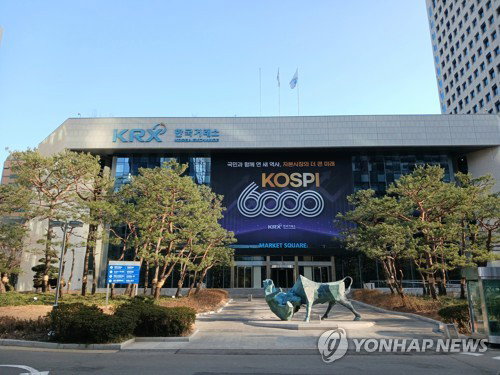
▲ Korea Exchange
emphasizes that a key background for extending trading hours is the declaration by major global exchanges, such as the New York Stock Exchange (NYSE) and Nasdaq, to establish a 24-hour trading system within the year to absorb liquidity from the Asian region, especially Korea. The Exchange analyzes that this global trend is a strategy to gain an advantage in global liquidity competition, beyond merely resolving time differences within their own countries. Recently, Binance, the world's largest digital asset exchange, also began 24-hour trading of investment products related to the Korean stock market. The Korea Exchange argues that extending trading hours is an essential measure to prevent the unilateral outflow of domestic capital overseas and explains it as part of efforts to enhance market accessibility to avoid falling behind international trends. The Exchange adds that it is not improving the system to favor specific investors.
▲ Extended Trading Hours to Counter Global Liquidity Competition
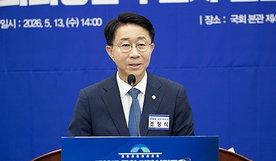
On the other hand, individual investors worry that extending trading hours will exacerbate the current imbalance, given the widespread perception that the domestic stock market is already a 'tilted playing field.' Jeong Eui-jeong, head of the Korea Federation of Stock Investors, argues that if trading hours are extended to 12 or 24 hours, foreign investors will reap significantly larger profits than they do now. He points out that during Korea's nighttime hours, when it is daytime in the U.S., foreign investors could pre-emptively acquire key information to manipulate stock prices, thereby reducing risks and maximizing opportunities, turning it into 'easy pickings.' While institutional investors might respond by implementing night shifts, most individual investors lack the ability or information to cope with the changed market environment, leading to a further widening gap with foreign and institutional players. The voice is growing louder among individual investors that extending stock market trading hours will lead to 'increased risk' rather than 'increased opportunity.'
Regarding inquiries about the potential impact on individual investors' mental and physical health if trading hours are extended to 12 or 24 hours, the Korea Exchange previously responded, "Investment is decided by individuals based on their free judgment, and all investment outcomes are the responsibility of the investor." This is interpreted as an attitude emphasizing the investor's own responsibility rather than providing direct measures for investor health concerns. Individual investors question whether Korea needs to proactively follow such measures when, apart from the U.S. with its significant time difference, there are no other countries where trading hour extensions are imminent, and they point out that such policies could disproportionately benefit specific investor groups.
▲ Individual Investors
KOFSI criticizes that unilaterally pushing for extended trading hours without consulting individual investors goes against the principles of a democratic nation. Given the ongoing opposition from labor unions, they maintain that this issue should not be hastily decided. KOFSI has been continuously active in blocking the extension of trading hours, including holding a protest in front of the Korea Exchange in Yeouido, Seoul, on April 23. Furthermore, a National Assembly petition has been underway since late last month, with 9,053 people currently in agreement, indicating a growing demand from individual investors for their opinions to be heard.
The Korea Exchange has commenced simulated market operations to support testing ahead of the implementation of pre- and after-market trading on September 14. Originally, the Exchange aimed to extend trading hours from 6 hours and 30 minutes to 12 hours per day by the end of last year. However, the opening date was later postponed to June 29 of this year, and recently, the schedule was again delayed to September 14. While these postponements are interpreted as a consideration of individual investors' backlash and market readiness, the fundamental controversy remains unresolved. Attention is focused on what solution the Korea Exchange will find between the two goals of strengthening the domestic stock market's global competitiveness and protecting individual investors.
![[금융진단] 미 증시, 지정학 완화·빅테크 반등에 상승](https://images.jkn.co.kr/data/images/full/98/28/982892.jpg?aspect_ratio=288:168&crop_gravity=northwest&width=288)