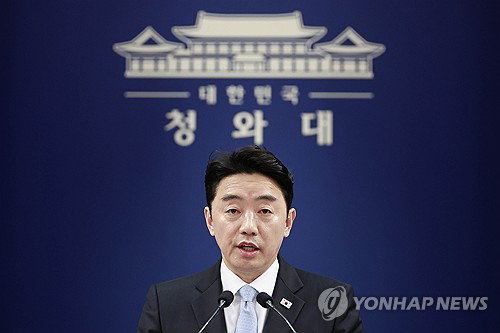
The Presidential Office announced that it secured 74.62 million barrels of crude oil in May, equivalent to 87% of last year's monthly average import volume, in response to supply instability caused by the Middle East situation. This achievement has reduced the nation's reliance on Middle Eastern crude oil from 69% to 56%. The government aims to mitigate concerns over energy supply disruptions and foster economic stability.
Crude oil supply instability, stemming from the aftermath of the Middle East situation, has emerged as a major issue for the Korean economy. Due to the possibility of a Strait of Hormuz blockade immediately after the outbreak of war, the volume of crude oil secured in April remained at only 57% of the past monthly average, amplifying concerns about energy security. This situation exposed the vulnerability of raw material supply chains across domestic industries, demanding a swift and decisive response from the government.
▲ Securing Alternative Supplies and Changes in Middle East Dependency
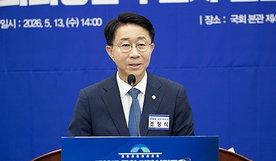
In response to crude oil supply instability caused by the Middle East situation, the Presidential Office stated that it is "striving with all its might to secure alternative crude oil supplies." As a result, it succeeded in securing 74.62 million barrels in May, approximately 87% of last year's monthly average import volume. Presidential Chief of Staff Kang Hoon-sik assessed that through these efforts, "there is no significant need to worry about supply disruptions." This is the result of swift, concerted action by both the government and the private sector, and is analyzed as a significant step forward in strengthening energy security.
Efforts to diversify crude oil import sources are also notable. By securing additional volumes from regions such as the Americas and Africa, the nation achieved the feat of lowering its dependency on Middle Eastern crude oil by 13 percentage points, from the previous 69% to 56%. In particular, diversification of tanker routes was also pursued, with 23.99 million barrels from Saudi Arabia and 16 million barrels from the United Arab Emirates (UAE) confirmed for import in May via alternative routes unrelated to the Strait of Hormuz. These strategic moves contribute to protecting the domestic energy supply chain from geopolitical risks in specific regions.
The government is also meticulously responding to supply instability for key raw materials such as naphtha and asphalt. It monitors the supply and demand trends of key items on a daily basis and operates a system that assesses and manages risk levels using a 'traffic light' method. It adopts a proactive approach, preparing not only for current supply and demand conditions but also predicting situations one and three months ahead. This reflects the government's commitment to minimizing supply chain disruption risks and supporting the stable operation of domestic industries.
▲ Raw Material Supply and Demand Management and Economic Indicator Analysis
As a result of monitoring trends by item, for naphtha, 2.1 million tons secured by Chief of Staff Kang Hoon-sik during his visit to the Middle East as a special envoy for strategic economic cooperation are scheduled to be introduced sequentially starting from the end of this month. This is expected to change the 'red' traffic light risk level to 'yellow', and the operating rates of petrochemical companies are also projected to increase. This is a positive signal for the recovery of industrial productivity through the stabilization of raw material supply.
Regarding asphalt supply and demand, reflecting on-site concerns, it is also marked 'red' and closely monitored. The government will conduct a full survey of the situation to adjust the timing of construction orders, and through public-private consultations, it will pursue a plan to prioritize supply to urgent construction projects. However, a Presidential Office official added that this is about assessing the urgency of public sector construction projects, and does not mean controlling supply to the private sector.
Thanks to these efforts, there is an assessment that the South Korean economy is steadfastly enduring and moving forward amidst the uncertainties of the Middle East war. The Q1 growth rate announced the previous day recorded 1.7%, the highest in five and a half years. This is analyzed as a result of the explosive growth in semiconductor production and exports, coupled with the government's swift and decisive response, contributing to the continuation of economic recovery since the inauguration of the new government. Foreign media outlets such as the Wall Street Journal (WSJ) also positively assessed that the Korean government is efficiently responding to the energy supply crisis, reporting that Korea is expected to withstand the crude oil shock from the Middle East well until July-August without severe economic damage. Major investment banks such as JP Morgan, Citibank, and Goldman Sachs also significantly raised their growth forecasts for Korea.
▲ Future Outlook and Policy Direction
However, a cautious view is also raised, suggesting that vigilance cannot yet be relaxed. It is pointed out that international oil and raw material prices remain high, and the impact of the Middle East war on prices felt by consumers might only be beginning. In response, the government is striving for the swift execution of supplementary budgets, including high oil price relief funds, to promote stability in people's livelihoods.
From a policy perspective, the background behind the freezing of the 4th maximum petroleum price the previous day is also noteworthy. Although there was a view that there was room for a price reduction due to a temporary drop in international oil prices, the explanation is that it was a situation of resisting previous upward pressure. A Presidential Office official stated that the review was conducted under the President's directive. Another official added that even though there were factors for an increase during the 2nd and 3rd maximum price decisions, prices were not raised, and if these accumulated factors were reflected according to the formula, gasoline should have increased by 125 won and diesel by 628 won, but the decision to freeze was made considering the stability of people's livelihoods and the burden of inflation.
Meanwhile, regarding the ongoing meetings on navigation in Hormuz, led by the UK and France, a Presidential Office official conveyed that it is not yet at the stage of discussing military cooperation. The stance is that this should be understood as a process of reaffirming the diplomatic efforts of the international community. The Korean government plans to continue its efforts to strengthen maritime security and ensure the stability of the energy supply chain through international cooperation.
![[금융진단] 미 증시, 지정학 완화·빅테크 반등에 상승](https://images.jkn.co.kr/data/images/full/98/28/982892.jpg?aspect_ratio=288:168&crop_gravity=northwest&width=288)