Coupang Inc., Coupang's parent company, expanded its lobbying activities in the U.S. political sphere, including the White House and the Vice President's office, spending $1.09 million in the first quarter of this year. This expansion comes amidst a data breach incident in South Korea and controversy surrounding the designation of Chairman Bom Kim as a "same person" (owner) under the Fair Trade Act. Coupang officially stated that the lobbying was not intended to pressure the South Korean government.
Coupang Inc., Coupang's parent company, spent $1.09 million on U.S. political lobbying activities in the first quarter of this year, expanding its targets to include key figures such as the White House and the Vice President. According to reports under the U.S. federal Lobbying Disclosure Act (LDA), Coupang Inc. used approximately 1.6 billion Korean Won (KRW) as lobbying funds from January to March this year. Seven Washington D.C.-based lobbying firms were commissioned by Coupang, and their lobbying targets explicitly included the White House Chief of Staff's office and the Vice President's office. This extensive lobbying activity is analyzed to have intensified following the large-scale data breach incident that occurred in South Korea last year.
▲ Coupang's Lobbying Expansion
Several complex issues in South Korea are contributing to the background of Coupang's expanded lobbying activities. Firstly, the move by the Korea Fair Trade Commission (KFTC) to designate Coupang Chairman Bom Kim as a "same person" (owner/head of a corporate group) under the Fair Trade Act is cited as one of the main reasons. The designation of a "same person" is the starting point for regulating corporate groups; once classified as a large corporate group, companies become subject to various regulations, including restrictions on cross-shareholding and prohibitions on debt guarantees. Coupang is strongly opposing this designation, arguing that it will create unnecessary side effects for corporate management. Civic groups such as the Citizens' Coalition for Economic Justice (CCEJ) are urging the designation of a "same person," emphasizing that Chairman Bom Kim is the de facto controlling entity of Coupang.
▲ Link to Controversies in South Korea
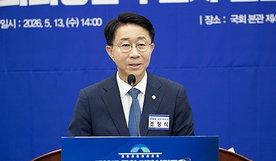
Concurrently, the recent incident where 54 Republican U.S. House Representatives sent a letter to Ambassador Kang Kyung-wha, demanding an end to discriminatory regulations against American companies, including Coupang, is also connected to the context of the lobbying activities. This letter expressed concerns that the South Korean government's regulations might be unfairly applied to U.S. companies, and related reports surged the day after the letter was sent. Notably, some of the representatives who signed the letter were also pointed out to have ties to Coupang's lobbying activities. National Assembly Speaker Woo Won-shik, on April 24, 2026, criticized this letter as "clear interference in internal affairs" and stated that Coupang should show respect to the Korean people. This series of events illustrates a complex interplay between domestic regulations and political movements within the United States.
▲ U.S. Congressional Letter and Speaker Woo Won-shik's Criticism
Coupang's expanded lobbying in the U.S. political sphere is generating observations that it could impact beyond simple corporate activities, extending to U.S.-Korea trade and diplomatic relations. Some have argued that Coupang's lobbying could be interpreted as an attempt to pressure the South Korean government. In response, Coupang officially refuted these claims in a reference material on April 24, 2026, stating, "Reports that we pressured the South Korean government through lobbying the U.S. administration and Congress are not true." Coupang clarified that the purpose of its lobbying activities is "economic cooperation, such as expanding professional visas for Koreans," and that "security matters are not included in the scope of lobbying."
However, despite these clarifications, concerns persist that the deepening involvement of U.S. political circles could lead to subtle discord between the two countries. Some media outlets, in particular, have analyzed that Coupang's lobbying activities could expand beyond mere economic issues to 'alliance and security' matters. This suggests the possibility that corporate regulatory issues within South Korea could escalate into international political affairs. There are also interpretations that the background behind Coupang's sharp increase in lobbying targets and expenditures since last year's data breach incident involves strategic considerations of a larger scale, beyond simple corporate profits.
Moving forward, the issue of Coupang's designation as a "same person" under the Fair Trade Act and its lobbying activities in U.S. political circles are expected to remain subjects of ongoing interest. The regulatory policies of the South Korean government and the reactions of U.S. political circles are anticipated to interact, forming a complex dynamic. While Coupang emphasizes that its lobbying activities are part of legitimate economic cooperation, the comprehensive lobbying efforts, coupled with the data breach incident, may make it difficult to fully alleviate public skepticism. Transparent corporate activities and smooth communication between the two governments are essential for the healthy development of U.S.-Korea trade relations. Some analyses also suggest that this issue could become an important test for the U.S.-Korea alliance.
![[금융진단] 미 증시, 지정학 완화·빅테크 반등에 상승](https://images.jkn.co.kr/data/images/full/98/28/982892.jpg?aspect_ratio=288:168&crop_gravity=northwest&width=288)